

Your AC Is Running, So Why Does Your Home Still Feel Uncomfortable?
A closer look at why your thermostat can read 72 degrees while your home still feels swampy and the humidity science most HVAC advice skips.
If your air conditioner is keeping the temperature low but your home still feels damp, muggy, or sticky, you’re not imagining it. Many homeowners assume that if the thermostat shows the right temperature, the AC is doing its job. In reality, comfort depends on more than just cooling the air.
You might notice that your skin feels clammy, the air feels heavy, or certain rooms never seem completely comfortable, no matter how low you set the thermostat. Some people even wake up feeling hot and restless despite the AC running all night. These are common signs that excess humidity is lingering inside your home.
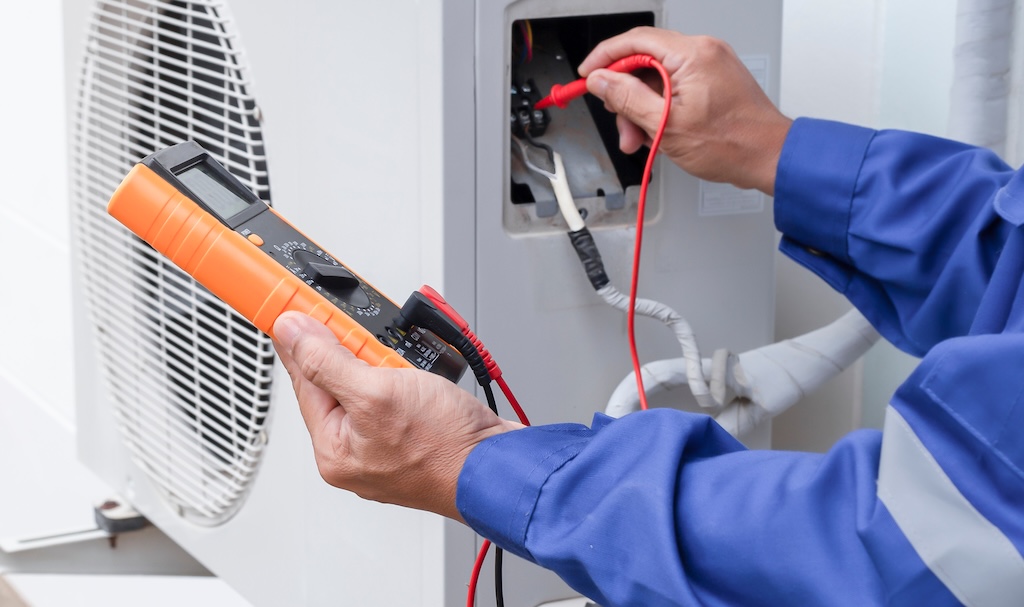
A properly functioning air conditioner does two jobs at once: it cools the air and removes moisture from it. When the system struggles to control humidity, your home can feel uncomfortable even when the temperature looks perfect on the thermostat. In many cases, these issues point to underlying problems that may require professional home AC repair services to restore both cooling performance and indoor comfort.
Temperature and Comfort Are Not the Same Thing
Comfort is a function of both temperature and relative humidity, and the two don’t move together the way most homeowners assume. A room at 72 degrees and 65 percent relative humidity feels noticeably stickier than the same room at 72 degrees and 40 percent humidity, even though the thermometer reads identically in both cases. That’s because moisture in the air slows the evaporation of sweat from your skin, which is your body’s main cooling mechanism. When the air is already saturated, your body can’t shed heat efficiently, so a room can technically be “cool” while your body still registers it as uncomfortably warm.
Most HVAC professionals consider 30 to 50 percent relative humidity the comfortable range for a home. Above that, air starts to feel sticky, wood floors and doors can swell, and mold-friendly conditions start to form in corners and closets. Below that range, on the other hand, homes tend to feel dry and static-prone. The sweet spot matters more than the number on the thermostat.
How Your AC Is Supposed to Remove Moisture, Not Just Heat
Dehumidification is a byproduct of how central air conditioning works, not a separate function. As warm, humid air passes over your system’s cold evaporator coil, the moisture in that air condenses on the coil’s surface, much like condensation forming on a cold glass of water. That condensed moisture drips into a drain pan and exits through the condensate line, while the now-cooler, drier air gets pushed back into your home.
This process takes time. A system needs to run long enough for air to pass over the coil repeatedly and for meaningful condensation to build up and drain away. A quick blast of cold air satisfies the thermostat, but it doesn’t necessarily pull much moisture out of the room. That distinction, cooling versus dehumidifying, is exactly where a lot of “my AC is running but my house still feels sticky” complaints originate.
Why an Oversized or Short-Cycling System Leaves Air Damp
An oversized air conditioner, one with more cooling capacity than the home actually needs, is one of the most common and least understood causes of persistent humidity. Because it has so much cooling power, an oversized unit reaches the thermostat’s setpoint quickly and shuts off before it has run long enough to remove meaningful moisture. The room cools fast, satisfies the thermostat, and the system powers down, leaving relative humidity largely untouched.
This pattern is called short cycling, and it can also result from other issues beyond sizing, including a failing thermostat, a refrigerant problem, or electrical faults that cause the compressor to start and stop erratically. Whatever the cause, the outcome feels the same to a homeowner: cold air blowing from the vents, a thermostat that reads the correct temperature, and a house that still feels muggy.
Signs Your System Needs Home AC Repair, Not Just a Thermostat Adjustment
A handful of symptoms tend to show up together when an AC’s dehumidification ability has broken down, and they’re worth paying attention to because they usually point to a mechanical issue rather than a settings problem.
- Sticky or heavy-feeling air, even in rooms directly served by a supply vent
- Musty odors, particularly in basements, closets, or rooms with less airflow
- Condensation forming on the inside of windows during warm weather
- Mold or mildew developing in corners, along baseboards, or inside closets
These symptoms are usually connected to a specific mechanical cause. Low refrigerant charge reduces the coil’s ability to absorb heat and moisture from the air passing over it. A dirty or frosted evaporator coil can’t transfer heat efficiently, which reduces both cooling and moisture removal.
A failing or incorrectly sized blower motor can push air across the coil too quickly for adequate moisture condensation or too slowly to maintain proper airflow. A clogged condensate drain line can cause water to back up rather than draining away, sometimes leading to the same musty smell the system was supposed to prevent. Each of these is a legitimate home AC repair issue, not something a filter change or a thermostat reset will fix.
When to Repair Air Conditioning Unit Components Versus Consider an Upgrade
A sticky, humid home doesn’t automatically mean you need a brand-new air conditioning system. Many humidity-related issues can be fixed with targeted repairs that restore your system’s performance at a fraction of the cost of replacement. However, there are situations where continuing to repair an aging or poorly designed system may no longer make financial sense.
| A Repair Is Usually the Better Choice When… | An Upgrade May Be Worth Considering When… |
| The system has a refrigerant leak that can be located and repaired. | The unit was incorrectly sized from the beginning and has always struggled with humidity control. |
| Dirty evaporator coils are reducing moisture removal efficiency. | The system is nearing the end of its expected lifespan and requires frequent repairs. |
| A faulty blower motor or fan component is affecting airflow. | Replacement parts are becoming difficult or expensive to source. |
| The AC has generally performed well until recently. | Energy bills continue to rise despite multiple repairs and regular maintenance. |
| The repair cost is relatively small compared to the value of the system. | Major components have failed multiple times within a short period. |
| The unit is still within the first half of its expected lifespan. | The cost of ongoing repairs is approaching the cost of a newer, more efficient system. |
Beyond Home AC Repair: Whole-Home Humidity Solutions
For homes that need more consistent control than a repaired AC alone can provide, a few upgrades are worth discussing with a technician. Home AC repair services address mechanical causes, but this has a ceiling: even a perfectly functioning system will struggle to hold a tight humidity range in a house with unusually high moisture load. A whole-home humidity control system can maintain that 30 to 50 percent comfort range independently.
Air Bear filtration systems improve airflow across the coil, supporting more consistent heat and moisture exchange. UV systems help control the mold and mildew growth that tends to develop in the same damp corners and coils where humidity problems start in the first place.
Thermostat calibration is worth checking too. A thermostat reading a degree or two off can cause a system to shut down earlier than it should, cutting a cooling cycle short before it has removed adequate moisture, which compounds the short-cycling problem described earlier.
If your home feels sticky despite a thermostat that says otherwise, the fix usually starts with a real AC repair diagnosis, not a lower temperature setting. Call (316) 943-4328 or schedule service with Fahnestock to find out what your system’s humidity control performance is actually telling you.
